


Why Hybrid Power Generators Are Replacing Diesel for Site Efficiency
In the high-stakes world of construction, mining, and equipment rental, the choice of power supply is no longer a simple logistical checkbox. It is a strategic financial decision. For decades, the diesel generator reigned supreme as the undisputed standard for off-grid power. It was reliable, familiar, and the fuel was affordable.
However, as we move deeper into 2026, the landscape has shifted. Soaring fuel prices, stringent carbon taxation, and noise regulations, such as London’s ULEZ or strict localized quiet hours, have exposed the vulnerabilities of the “diesel-only” model.
The challenger, the Hybrid Power Generator, is not merely an alternative; it is a technological evolution designed to correct the inefficiencies of its predecessor. This article provides a granular comparison between standard diesel setups and modern hybrid systems, helping you determine which solution protects your profit margins.
Efficiency and Load Management
To understand the core advantage of hybrid systems, one must first acknowledge the fatal flaw of the standard diesel generator known as oversizing.
The Diesel Reality and The Curse of Low Load
Site managers typically size generators to handle peak demand, which occurs when a tower crane lifts a heavy load or dewatering pumps kick in. Yet site data reveals that these peak moments often constitute less than 15% of the day. For the remaining 85% of the time, such as night shifts or security monitoring periods, the generator continues to run unnecessarily.
Running a 100kVA engine to power a 2kW security cabin causes “Wet Stacking.” The engine fails to reach optimal combustion temperature, leading to unburned fuel accumulation in the exhaust system. This results in:
- Glazed cylinder liners.
- Injector fouling.
- Black smoke emissions.
- Permanent engine damage.
The Hybrid Solution and Smart Optimization
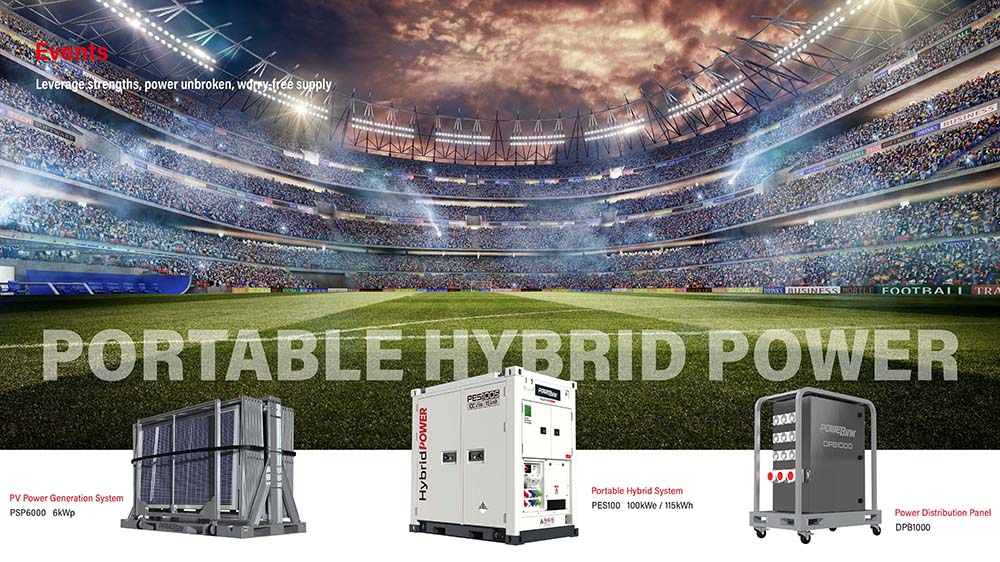
A Hybrid Power Generator like the PowerLink PES Series fundamentally alters this dynamic because it integrates a Battery Energy Storage System with the generator.
- During Low Loads: The intelligent control system shuts the generator off completely. The site runs on silent battery power.
- During Peak Loads: The generator activates only when demand exceeds the battery’s capacity or when the battery requires recharging.
By ensuring the generator only runs at its optimal efficiency range and remains off for the rest of the time, the hybrid system eliminates wet stacking and maximizes every drop of fuel.
Financial Head-to-Head ROI Analysis
The primary hesitation for many rental companies is the higher upfront capital expenditure (CAPEX) of hybrid units. However, looking at the weekly rental rate in isolation presents a distorted picture. The true metric is the Total Cost of Operation (TCO).
Let us compare the operational costs of a typical construction site setup operating 24 hours a day.
Cost Matrix of 60kVA Diesel Generator vs PowerLink Hybrid System
| Operational Metric | Standard Diesel Generator | Hybrid Power System (Diesel + BESS) | The Hybrid Advantage |
| Weekly Runtime | 168 Hours (Continuous) | ~28 Hours (Smart Cycling) | 83% Less Engine Wear |
| Fuel Consumption | ~840 Liters / Week | ~160 Liters / Week | Massive Fuel Savings |
| Refueling Frequency | Weekly visits required | Monthly visits required | Lower Logistics Costs |
| Service Interval | Every 3 weeks (500hr interval) | Every 18 weeks | Reduced Maintenance Labor |
| CO2 Emissions | ~2,250 kg / Week | ~430 kg / Week | ESG Target Compliance |
Note: Data reflects typical low-load site profiles. Actual savings depend on specific power usage.
When you factor in the reduction in fuel purchases and the drastic cut in maintenance labor, the hybrid system frequently delivers a return on investment within 6 to 12 months.
Noise Pollution and Community Relations
Urban construction sites face increasing pressure from local councils regarding noise pollution. A standard diesel generator produces a constant low-frequency drone, often restricting site operations to specific daylight hours.
The Silent Mode Advantage Because the hybrid system runs on battery power for the majority of the time, especially during low-load periods like nights and weekends, it operates in total silence.
- Extended Hours: This capability allows contractors to run essential equipment—such as drying rooms, CCTV, or security systems—overnight in residential areas without triggering noise complaints.
- Worker Safety: A quieter site improves communication and reduces long-term hearing risks for the workforce.
Future-Proofing with Solar Integration
A standard diesel generator is a closed system; it burns fuel to create power. It cannot easily adapt to renewable energy sources without complex external microgrid controllers.
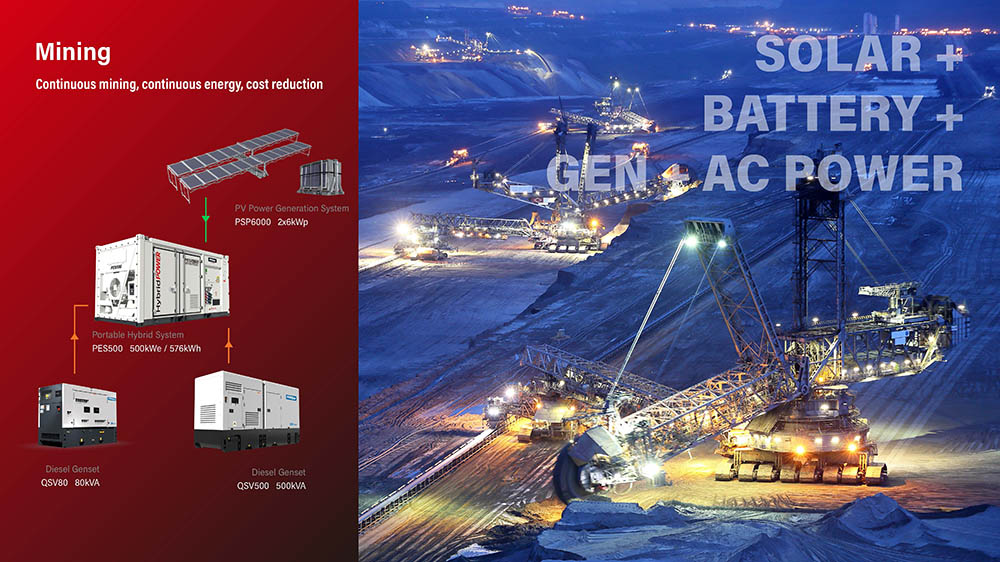
PowerLink Hybrid Systems are designed with Renewable Inputs as a standard feature. They include built-in MPPT solar chargers.
- Scenario: By adding portable solar panels to the roof of site cabins or containers, the hybrid unit can charge the batteries directly from the sun.
- Result: In summer months or light-load applications, the diesel engine may not need to run at all. This transforms a “low emission” site into a “zero emission” site, a capability that provides a significant competitive edge when bidding for government or green-certified infrastructure projects.
PowerLink Solution
We engineered the PowerLink PES Series specifically to bridge the gap between traditional reliability and modern efficiency. It is a mobile, all-in-one power station featuring:
- Integrated Design: Diesel generator + Lithium BESS + Hybrid Inverter on a single chassis.
- Plug-and-Play: No complex installation required; it deploys just like a standard generator.
- Telematics: Remote monitoring allows fleet managers to track fuel savings and carbon reduction in real-time.
Silence is Profitable
The construction site of 2026 is quieter, cleaner, and data-driven. Adopting mobile energy storage and hybrid generators is the most effective strategy to safeguard your projects against fuel price volatility while meeting the stringent ESG requirements of modern infrastructure contracts.
Ready to calculate your potential savings?
Stop paying for wasted fuel. Let PowerLink help you configure the optimal power solution for your next project. Contact PowerLink Energy today to future-proof your site power.