


Light towers are essential equipment for providing temporary illumination in environments where fixed electrical infrastructure is unavailable. Common applications include construction sites, roadwork, emergency response, outdoor events, and industrial operations. A light tower combines high-intensity lamps with a power generator, often driven by a diesel engine for robust performance and long runtime.
One core technical question for buyers and specifiers is: how many watts does a light tower generator produce and what does that mean for illumination and auxiliary power? This article explains typical power output ranges, how to interpret wattage, and how it impacts performance.
What Defines a Light Tower Generator’s Wattage
The wattage of a light tower generator refers to the electrical output capacity of the onboard generator. It determines:
- How much lighting load the unit can support
- Whether auxiliary loads (such as power tools or small equipment) can be powered
- Fuel consumption and runtime expectations
In a typical light tower, the generator must support both the lamp load and any additional uses without overloading. Power ratings are usually expressed in watts (W) or kilowatts (kW). One kilowatt equals 1,000 watts.
Typical Wattage Ranges for Light Tower Generators
Light towers come in a wide range of power configurations depending on the lighting fixtures used and whether auxiliary power is expected.
Standard Worksite Light Towers
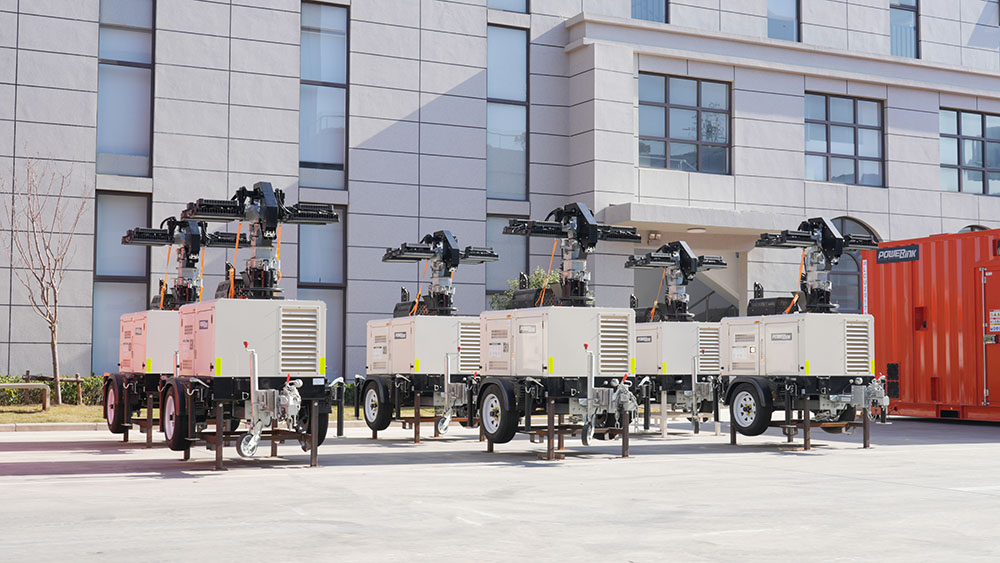
Most mobile diesel-powered light towers designed for construction or industrial use have generator ratings in the 4 kW to 8 kW range:
- Many units with four 1,000-watt metal halide lamps are powered by generators rated around 6 kW to 8 kW.
- LED light towers with lower individual lamp power often run on generators in the 3 kW to 5 kW range while still providing bright output.
These generators provide sufficient power not only for lighting but also for small auxiliary loads through receptacles.
Larger Capacity Light Towers
For applications requiring extensive illumination or additional electrical utility power, light towers may use generators with higher capacity:
- Heavy duty mobile units can be equipped with generators rated at 15 kW or more to support additional lights, tools, or site equipment.
- Some industrial models and combination power + lighting systems feature generators capable of 20 kW or greater.
Such higher wattage models deliver both illumination and export power, enabling more versatile use on busy job sites.
Specialized Power Configurations
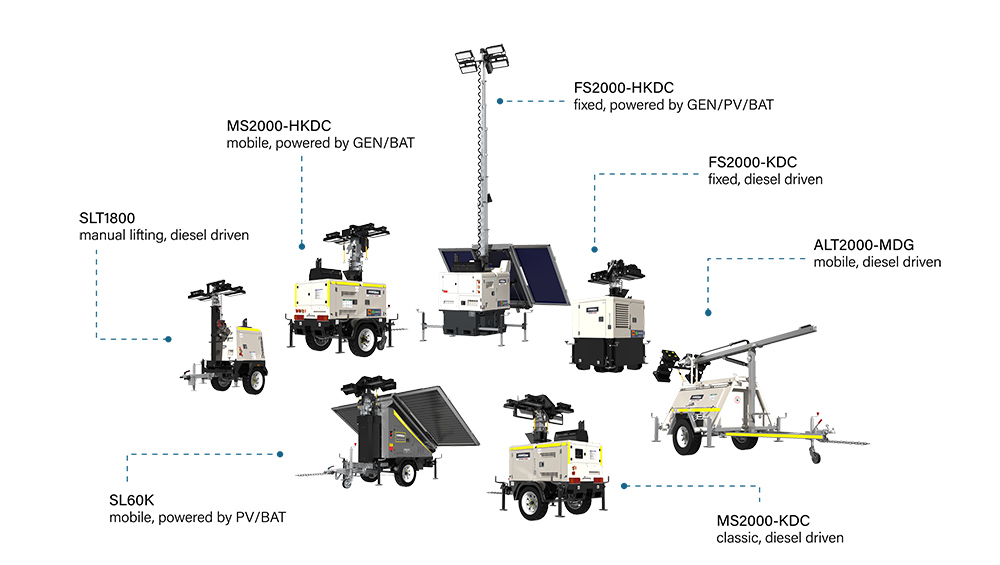
In some cases, light tower systems are designed to support integrated hybrid or renewable technologies alongside the diesel generator. Hybrid designs may combine battery banks with a diesel generator sized, for example, at 10 kW, enabling continuous light with optimized fuel use and reduced engine runtime.
How Lamp Type Affects Required Generator Wattage
The choice of lighting technology plays a major role in determining generator size:
Metal Halide Lamps
Traditional metal halide lamps typically consume around 1,000 watts per lamp. A four-lamp tower with these fixtures may draw 4,000 watts just for lighting, which means the generator must deliver additional capacity to cover engine and control system loads plus any peripheral devices.
LED Lamps
LED fixtures are more efficient, often requiring just 200–350 watts per lamp while providing similar illumination quality to much higher-wattage metal halide lamps.
In these cases, a 4-lamp LED tower may need only 800–1,400 watts for lighting, allowing the generator to be smaller or to support auxiliary power more easily.
Accounting for Auxiliary Loads
When selecting a light tower, it is important to understand whether you need power solely for the lights or also for external loads such as tools, power equipment, or distribution panels.
Some light towers include auxiliary outlets powered directly from the onboard generator:
- Units with 4 kW generators can often handle the lighting load and small power tools simultaneously.
- Light towers with 10 kW to 20 kW generator capacity are suitable for powering auxiliary loads such as job site tools, temporary offices, or communications gear.
Matching generator wattage to total expected load is critical for safe, reliable operation.
Choosing the Right Light Tower for Your Needs
When planning a lighting solution:
- Estimate the lighting load based on lamp type and number of fixtures.
- Add auxiliary load requirements if auxiliary power will be needed.
- Select a generator size with sufficient margin above the total expected load to prevent overloading.
- Consider runtime requirementsand fuel capacity for your projected usage period.
This approach ensures reliable performance in demanding environments.
Light Tower Generator Wattage Comparison Table
| Light Tower Type | Lamp Configuration | Typical Generator Output | Typical Applications |
| LED Light Tower | 4 × LED fixtures | 3 kW to 5 kW | Roadwork, events, emergency response, low fuel consumption sites |
| Metal Halide Light Tower | 4 × 1,000 W lamps | 6 kW to 8 kW | Construction sites, industrial projects, traditional lighting setups |
| Hybrid Light Tower | LED + battery + generator | 8 kW to 12 kW | Noise sensitive areas, extended runtime projects |
| High Capacity Light Tower | Multiple fixtures + auxiliary power | 15 kW to 20 kW or more | Large construction sites, power tools, temporary site power |
Explore Customized Light Tower and Generator Solutions
For applications that require tailored lighting power solutions, understanding how generator capacity, lamp configuration, and auxiliary power needs interact is essential. If your project demands a custom specification or integration with other equipment, resources related to mobile light tower generators can help you evaluate options that match your unique requirements.
Light tower systems are versatile tools, and selecting the right wattage generator ensures both effective illumination and operational flexibility.