


RHE Series: Energy Storage to Cut Residential Costs
Dec 11,2025
With rapid socio-economic development, the electrification rate of residents’ production and daily life continues to rise, the number of electrical facilities in communities is constantly increasing, and the popularity of electric vehicles is also growing. However, there is currently a severe shortage of parking spaces and charging facilities in communities, and electricity consumption mainly relies on traditional grid power. This not only results in high electricity prices and large carbon emissions, but also poses significant safety and travel hazards. In the event of a sudden power outage, basic energy-consuming facilities such as elevators are easily paralyzed, and insufficient power in electric vehicles will seriously affect residents’ normal travel. Therefore, communities urgently need to configure basic energy systems to ensure minimum and emergency energy needs.
To accurately meet the electricity needs of residential communities and residences, PowerLink has developed and designed the RHE series of energy storage battery products.
This product integrates high-performance energy storage batteries, PCS, and EMS, supports dual input from PV and the grid, and possesses the core characteristics of clean energy and peak shaving and valley filling. It can effectively solve the dual anxieties of “fear of power outages” and “high electricity prices” for residents.
Solution
Core concept: A community-based distributed energy ecosystem is built around photovoltaic (PV) power generation, energy storage and discharge, self-consumption, surplus electricity fed into the grid, and peak-valley arbitrage. During the day, PV power generation prioritizes electricity needs for community public facilities such as electric vehicles, streetlights, activity centers, and elevators, with surplus electricity stored in the energy storage system. During peak evening hours, the energy storage system works in conjunction with surplus PV power to supply electricity, significantly reducing the peak electricity cost for the community from the grid.
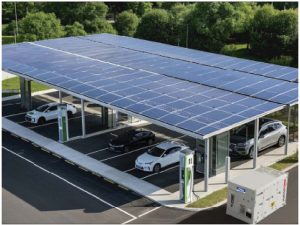
Figure 1 Electric vehicle charging station
- In newly built or large communities, utilize idle land or parking lots for renovation, and install photovoltaic modules on the roof of the carport.
- Photovoltaics: 10-20kW photovoltaic modules are installed per 100 parking spaces. Taking a 2.6MW system as an example, the annual power generation is expected to exceed 3 million kWh, providing a stable clean energy source for the community.
- Energy Storage: 15-30kWh per charging pile, using the RHE24S3 energy storage product, supporting both grid-connected and off-grid operation, with a continuous discharge capacity of 24kW. Utilizing the difference in electricity prices between day and night, peak-valley arbitrage and emergency discharge can be achieved.
- Charging: A hybrid deployment of 7kW AC slow charging and 60kW DC fast charging equipment. AC slow charging meets residents’ nighttime home charging needs, while DC fast charging is suitable for temporary energy replenishment scenarios. The overall charging cost is approximately 10%-15% lower than the market price, significantly reducing residents’ vehicle operating costs.
- Energy Sharing: The EMS system enables energy sharing among residents. Multiple power generators can store excess electricity in the community energy storage pool, earning electricity bill credits or points rewards. During peak electricity demand, the energy storage pool supplies power to residents facing power shortages, forming a community energy ecosystem of “distributed generation + shared energy storage.”
- Power Outage Emergency Backup Mode: When a power outage occurs in the municipal grid, the energy storage system automatically switches to emergency power, prioritizing the power needs of charging stations and community public infrastructure, avoiding disruptions to daily life and safety caused by power outages.
- Older or compact communities: “corner space + distributed layout” model
Space Utilization: Utilize vacant spaces between buildings, unused green areas, and other marginal resources by employing micro-stations consisting of 1-3 charging piles + 10-20kW photovoltaic panels, or wall-mounted charging cabinets.
Technology Compatibility:
- Photovoltaics: Flexible modules are used to adapt to rooftops/walls, avoiding the occupation of ground space;
- Energy Storage: Equipped with 10-15kWh small energy storage cabinets, with optional RHE12S3 energy storage devices, supporting continuous discharge of 12kW, meeting the emergency power needs of 2-3 charging piles;
- Charging: Priority is given to configuring smart charging cabinets (supporting battery swapping + slow charging), suitable for delivery/residential electric bicycles and small new energy vehicles.
- Distributed layout of the community energy storage system (e.g., one 12kWh RHE12S3 energy storage cabinet per 3 buildings), forming a “main and backup linkage” with the main energy storage in the photovoltaic carport;
- Automatic three-level power supply activation during power outages: ① Prioritize charging piles and emergency lighting; ② Secondarily supply the community service center; ③ Finally, support critical household energy use.
- Energy Sharing: Achieve energy sharing among residents through the EMS system, realizing mutual benefit.
- Profit points: Charging service fees (gross profit margin of approximately 40%), revenue from surplus solar power sold to the grid, and advertising space rental (solar carport pillars).
Energy Storage Product Introduction
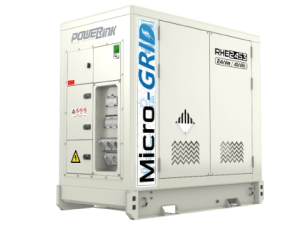
Figure 2 RHE Series product images
PowerLink has innovatively designed and manufactured the RHE series of residential energy storage products, featuring interfaces for photovoltaic power generation, diesel power generation, and grid input. These products enable multi-energy complementarity, ensuring the stability and diversity of energy supply. The series boasts a compact design, flexible and convenient deployment, and plug-and-play functionality, making it particularly suitable for applications requiring both grid-connected and off-grid power supply modes, such as villas, farms, communities, and small businesses.
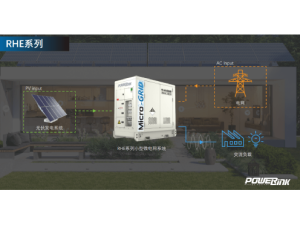
Figure 3 Application System Diagram of RHE Series Products
RHE Series Product Specifications
| Model | Power
(KWe) |
Voltage
(V) |
Phase | Battery capacity (KWh) |
| RHE12S | 12 | 220/230/240 | 1P | 30.72 |
| RHE24S | 24 | 220/230/240 | 1P | 40.96 |
| RHE12S3 | 12 | 380/400/415 | 3P/4W | 30.72 |
| RHE24S3 | 24 | 380/400/415 | 3P/4W | 40.96 |
| RHE30S3 | 30 | 380/400/415 | 3P/4W | 62.2 |
| RHE60S3 | 60 | 380/400/415 | 3P/4W | 92.0 |
| RHE100S3 | 100 | 380/400/415 | 3P/4W | 115.0 |
What problems have PowerLink RHE series products solved for residential communities?
- Reduced Energy Costs & Carbon Reduction: For ordinary residents, this means a stable power supply, avoiding the inconvenience of grid outages. Electric vehicle owners can charge their vehicles right at their doorstep, and due to the high proportion of photovoltaic power, charging costs are reduced by 10%-15%. For community property management, peak-valley arbitrage can save 30%-50% on public electricity expenditures annually, while effectively reducing carbon emissions. Statistics show that every 100 households in a community reduce emissions by approximately 80 tons annually, contributing to the community’s green and low-carbon development.
- Emergency Backup: When the grid fails and power is lost, the photovoltaic-storage-charging microgrid system automatically switches to off-grid mode, prioritizing power supply to critical community loads such as elevators, emergency lighting, community hospital outpatient services, and senior activity centers, reducing dependence on the main grid.
- Energy Sharing Model: Through the EMS system, energy sharing among residents is achieved. Residents with high photovoltaic power generation can store excess electricity in the community energy storage pool. During peak electricity demand, the energy storage pool supplies power to residents with tighter power supplies, receiving electricity bill deductions, forming a community energy ecosystem of “distributed generation + shared energy storage.”
--- END ---