


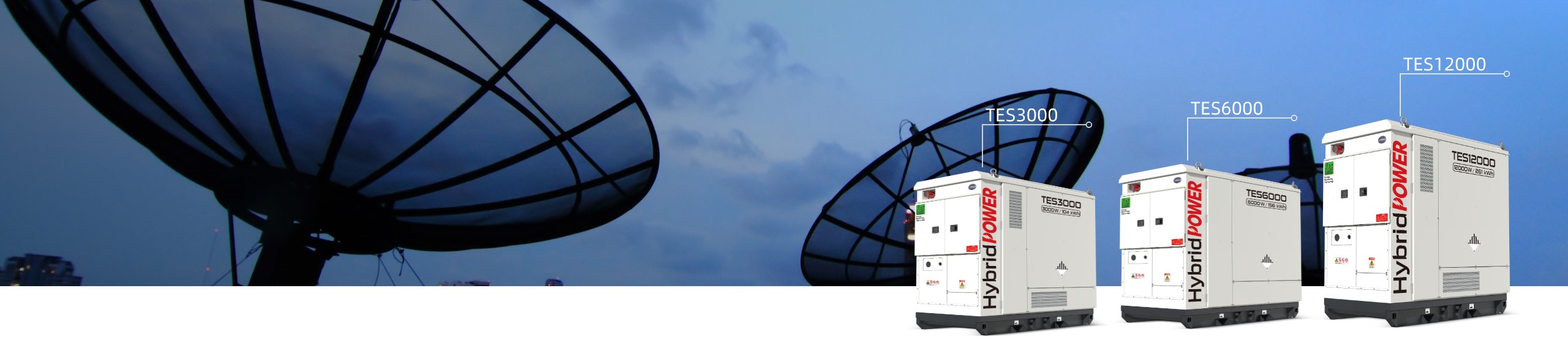
TES Series Hybrid Energy System for Telecom Sites
GRID / PV / WIND / BATT / GEN Hybrid Energy System
Powerlink’s TES series hybrid energy solution for telecom sites not only solves the pain points of traditional power supply modes in remote areas, such as high costs, service difficulties, poor reliability, and weak guarantee capabilities, but also, through intelligent algorithms, prioritizes users’ economic and environmental needs for energy, employing multi-energy collaborative operation to achieve a qualitative improvement in efficiency.
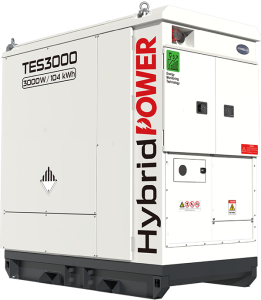
Based on the conditions of the installation site and through scientific calculations, the TES hybrid power system enables telecom sites’ energy supply to achieve efficient and stable operation. With proper product selection, it can reduce operation and maintenance costs by more than 90% compared to traditional energy supply solutions.
- Multi-energy Complementarity: Grid priority + PV supplement + energy storage regulation + genset emergency.
- Intelligent Scheduling: Built-in EMS and Enerweb cloud platform, real-time monitoring, remote O&M.
- Environmentally Friendly: Support green energy and reduce carbon emissions.
To learn more about our specific product parameters and features, please visit the TES Series Hybrid System For Telecom Site page.
Core Values & Application Instruction
- Significantly reduces generator uptime and overall energy costs.
- Improve the continuity of power supply and operational stability of telecom site.
- Improve the controllability and utilization efficiency of PV energy.
- Reduce system complexity and on-site operation and maintenance pressure.
- Flexible adaptation to various base station types and power supply conditions.
Configuration Interactive Logic:
All energy modules operate interactively, a single configuration change affects overall operation.
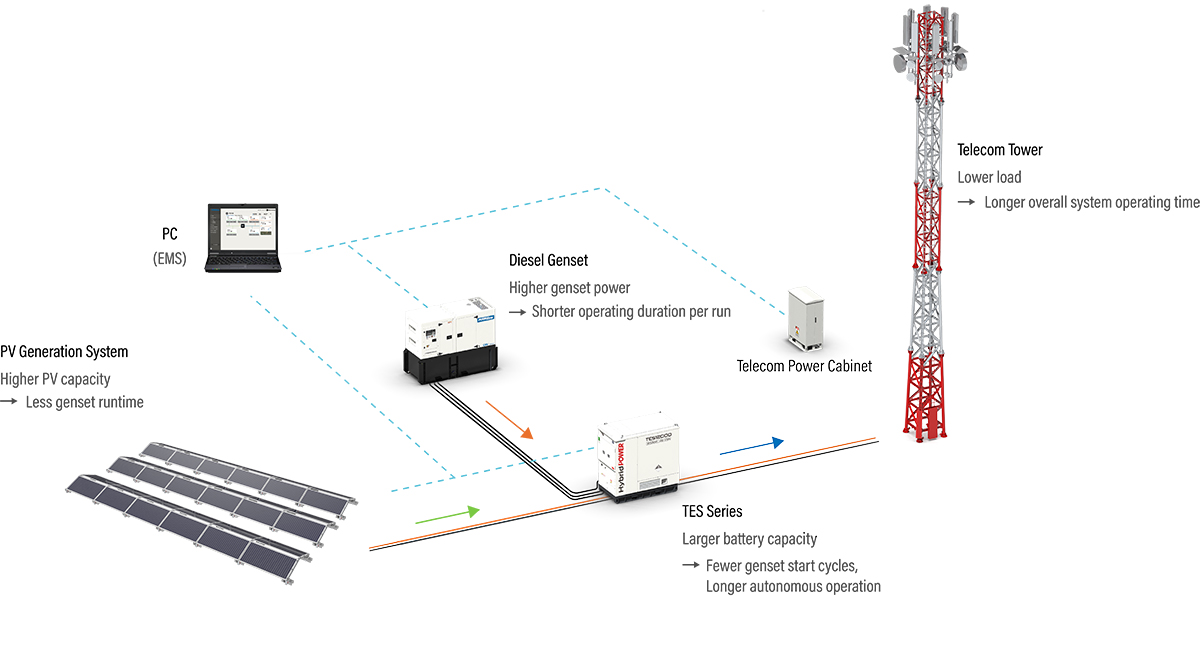
System Topology & Operating Environments
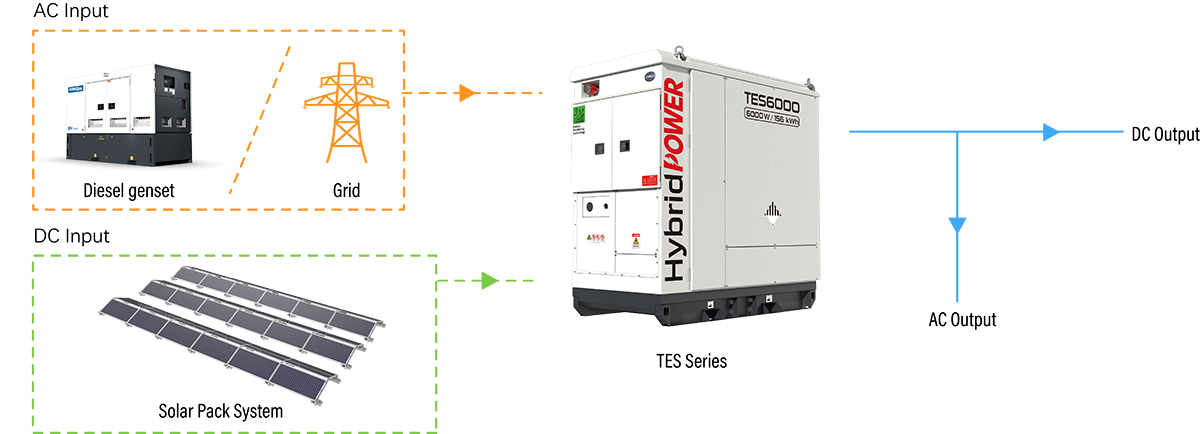
The TES Series acts as the centralized power hub, dynamically routing energy from diverse sources to meet the telecom tower’s demand.
- AC Input: Connects to Diesel Genset and Grid.
- DC Input: Connects to the Solar Pack System.
- Power Output: The TES Series intelligently delivers both DC Output and AC Output directly to the telecom tower and power cabinets.
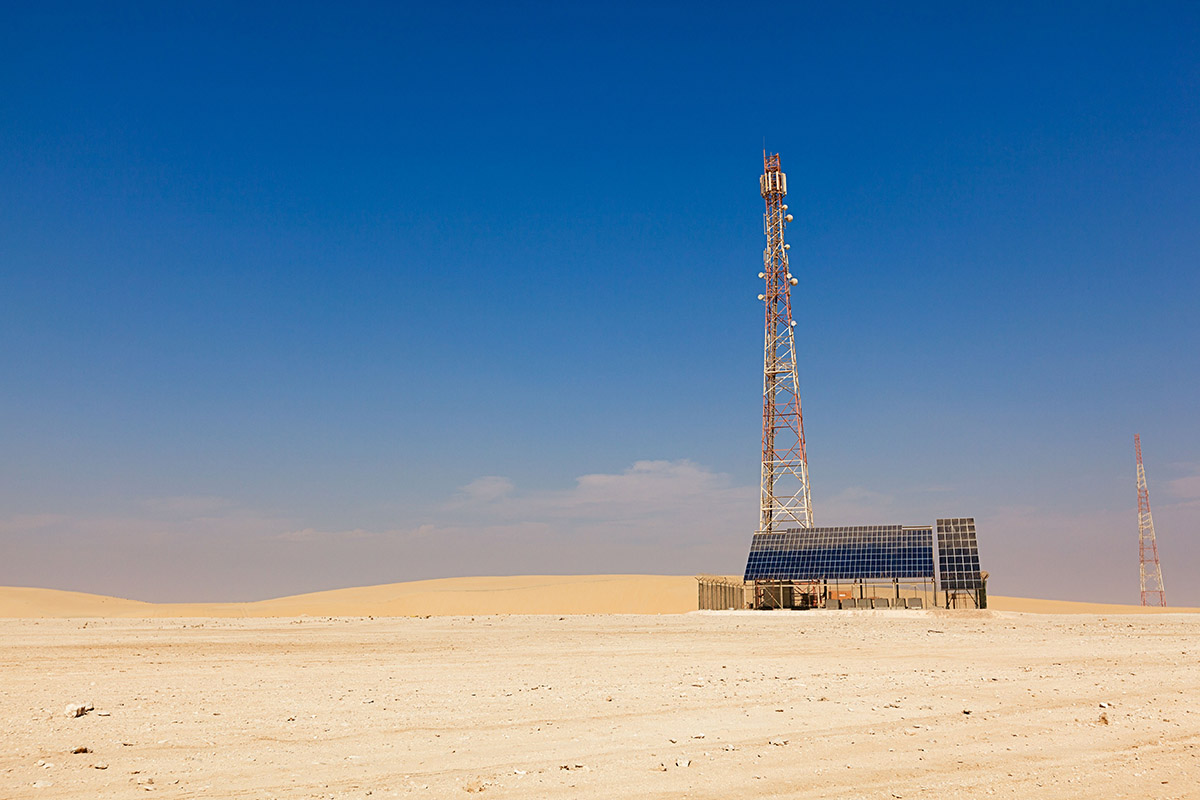
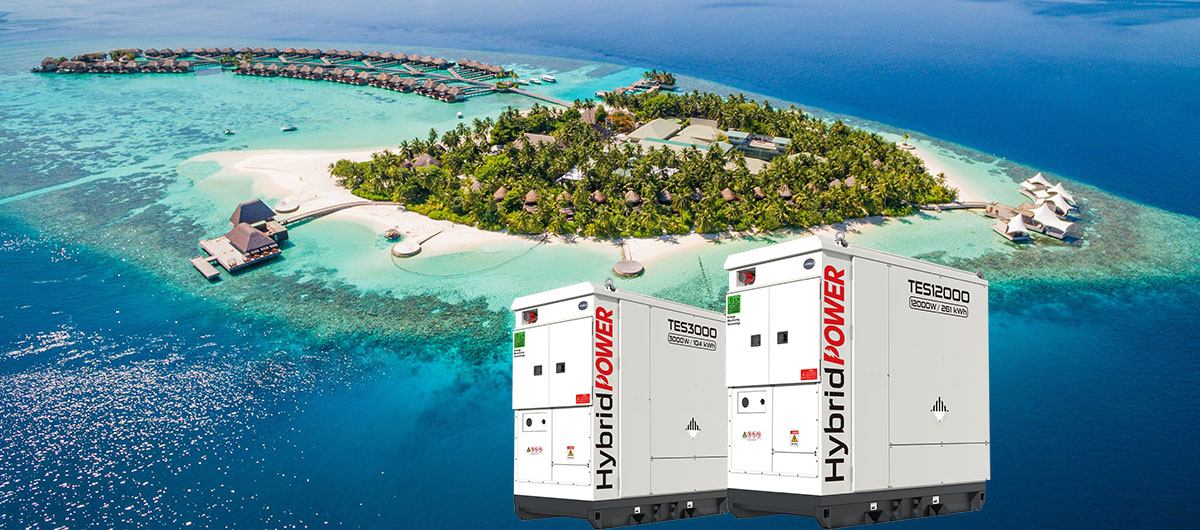
Proven Application Environments: Our systems are designed for extreme adaptability, reliably operating in Super Cold and Hot Environments, remote Telecom Base Stations, and Coastal Areas.
Application Scenarios
1. Without-Grid Scenario
SOLAR + BATTERY + GEN
Pain points:
- Generators require long operating times, resulting in high fuel costs.
- Frequent start-stop cycles of the generator result in high failure rates and maintenance costs.
- Low operating efficiency and poor energy utilization.
- PV power generation is highly intermittent and difficult to provide a stable power supply.
TES solution & Operation Logic:
Uses an energy storage system as the core regulating unit. With ample sunlight, PV prioritizes supplying load, excess charges battery. When generator is running, it supplies load and quickly charges battery in high-efficiency range. Low battery triggers generator restart.
Achieved Effect: Significantly reduce generator operating time, increase PV proportion, reduce fuel costs and maintenance intensity.
2. With-Grid Scenario
POOR GRID + GEN + PV + BATTERY
Pain points:
- Unstable grid power.
- The generator starts frequently and operates in low efficiency.
- PV power generation is unstable and difficult to directly participate.
- Multiple energy sources coexist, system coordination is complex.
TES solution & Operation Logic:
Prioritizes grid power and incorporates PV as auxiliary. In normal grid, both supply load and charge battery. In case of grid fluctuations, TES system takes priority. Low battery and no grid power will start the generator.
Achieved Effect: Reduce the impact of short-term power outages, reduce generator start-up frequency, improve PV availability and overall energy efficiency.
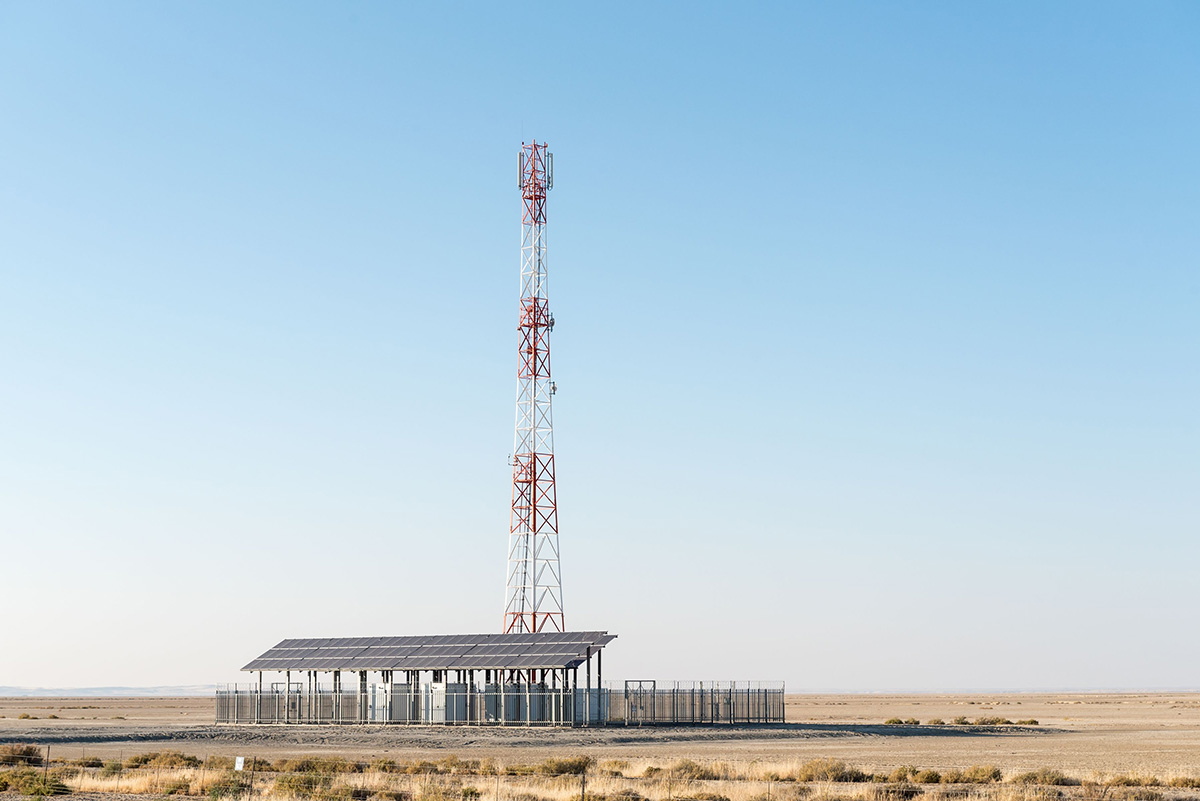
3. Solar + Batt Scenario
SOLAR + BATTERY
Pain points:
- In areas without grid power, power supply options are limited.
- PV power supply is unstable, with high risks at night/cloudy days.
- Communication equipment has high requirements for continuous supply.
- Operational resources are limited.
TES solution & Operation Logic:
Achieves a stable match between PV power generation and communication loads. Ample sunlight prioritizes load/charging. Insufficient lighting or night time, TES provides continuous power. System automatically adjusts output based on state of charge.
Achieved Effect: Achieving continuous power supply without generators, improve PV utilization/stability, reduce operating noise and maintenance complexity.
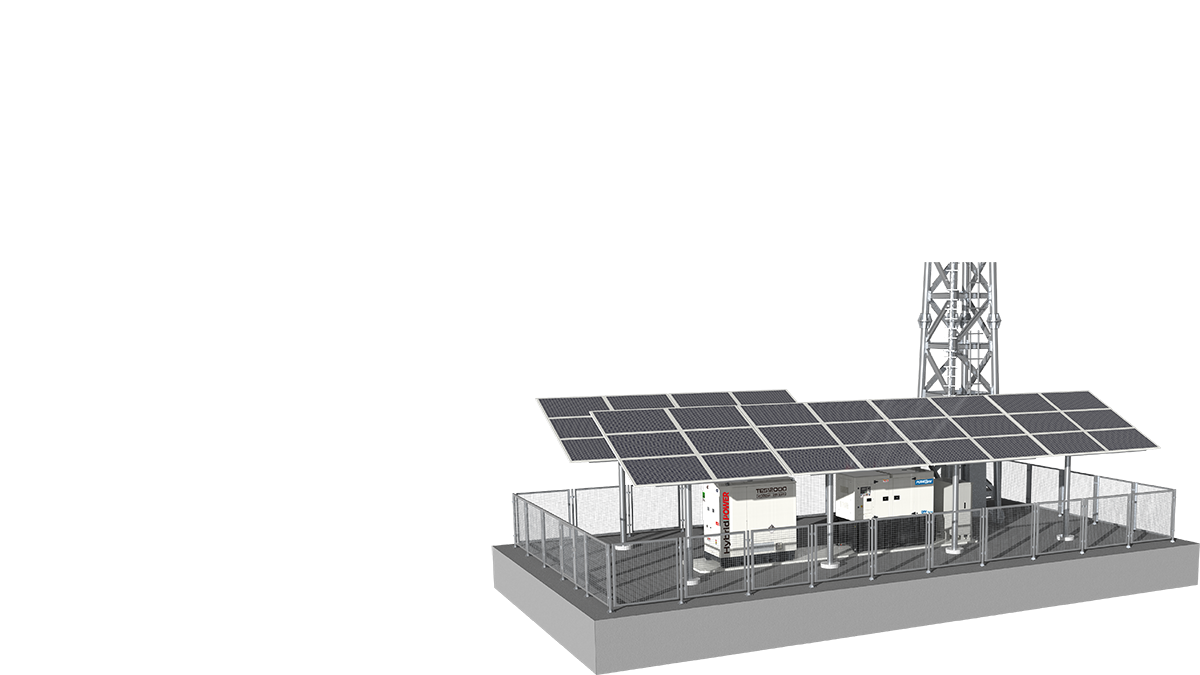
Telecom Sites Solutions Configuration Examples
Note: 19.2 kW is the recommended continuous operating power of the QSV30PS diesel genset.
- Area: 9 x 8 m
- Solar pack: 12 PV (6kWp)
- Generation: 36 kWh/day
- Area: 11 x 9 m
- Solar pack: 24 PV (12kWp)
- Generation: 72 kWh/day
- Area: 18 x 9 m
- Solar pack: 36 PV (18kWp)
- Generation: 108 kWh/day
Product Selection Guides
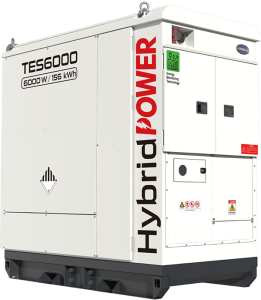
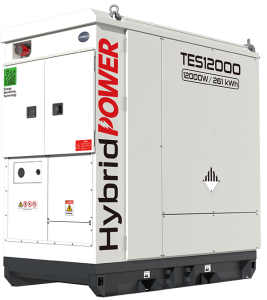
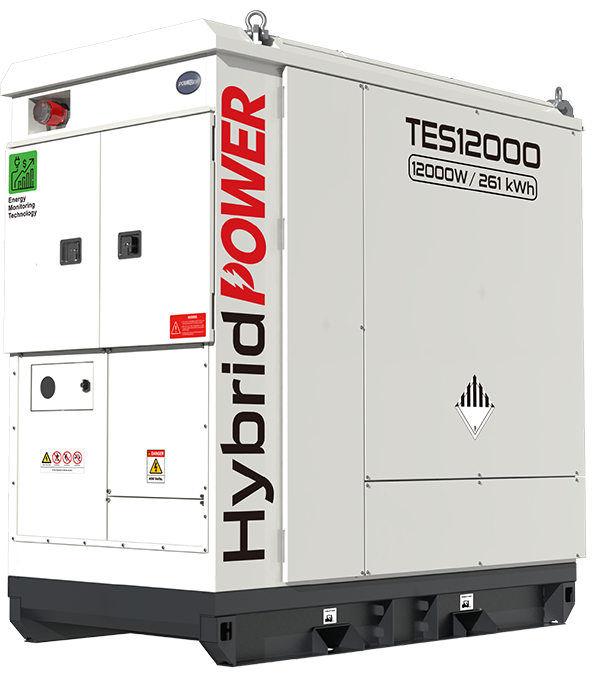
TES Series Selection
- Energy storage management: LFP battery packs, supports 0.5C charge/discharge rate, cycle life over 8000 cycles.
- Grid connection: Support AC/DC dual-mode input, compatible with different global grid standards.
- Backup power supply: Equipped with a small genset interface, enabling continuous power supply for 72 hours.
- Smart energy management platform: Support real-time monitoring, KPI reports, and remote operation and maintenance.
| View Product ➔ | |
 |
 |
|
| Specification | TES3000 | TES6000 | TES12000 | |
|---|---|---|---|---|
| DC Output | Power (kWe) | 3 | 6 | 12 |
| Voltage (Vdc) | 48 | 48 | 48 | |
| AC Output | Power (kWe) | 2 | 2 | 2 |
| Voltage (Vac) | – | 220 ~ 240 | ||
| Phase | 1 | 1 | 1 | |
| Batt.Capacity (kWh) | 104.5 | 156.7 | 261.2 | |
| AC Charger (kW) | 30 | 60 | 60 | |
| PV Charger (kWp) | 19+19 | 38+38 | 38+38 | |
| 40′ Loading (qty) | 12 | 11 | 11 | |
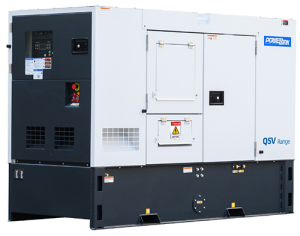
Diesel Genset Selection
Telecom-grade high-efficiency genset for off-grid or unstable-grid sites, dual-layer fuel tank for uninterrupted runtime. Core features: Custom 1000h extended service interval, Anti-fuel-theft protection design, High-reliability design, Thermal equilibrium validated at 50°C ambient, Coastal anti-salt-spray corrosion package, Ultra-low noise enclosure.
| View Product ➔ | 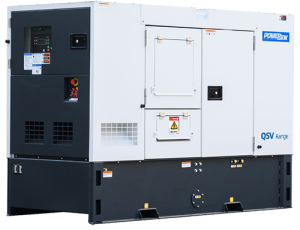 |
 |
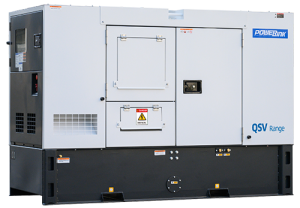 |
| Specification | QSV30PS | QSV45PS | QSV60PS |
|---|---|---|---|
| Prime Power (kVA/kW) | 30/24 | 45/36 | 60/48 |
| Standby Power (kVA/kW) | 33/26 | 49/39 | 66/53 |
| Frequency (Hz) | 50 | 50 | 50 |
| Rotate Speed (RPM) | 1500 | 1500 | 1500 |
| Phase (p) | 3 | 3 | 3 |
| Tank Capacity (L) | 125 | 170 | 170 |
| Fuel Consumption (L/h, 100% load) | 6.8 | 10.7 | 13.9 |
PV System Selection
| Specification | SP6000 | SP12000 | SP18000 |
|---|---|---|---|
| Output Power (kWp) | 6 | 12 | 18 |
| Conversion Efficiency (%) | 23 | 23 | 23 |
| Type of PV Panels | monocrystalline silicon | ||
| Power of PV Panels (Wp) | 500 | 500 | 500 |
| Daily Generation (kWh) *6h/day | 36 | 72 | 108 |
| Service Life (year) | 25 | 25 | 25 |
Design Features & Core Technologies
TES Series Design Features
- Hybrid energy input
- Plug and charge, plug and play
- Specialized for telecom site
- DC & AC power output
- Operating ambient temperature -20°C ~ 50°C
- Battery storage
- Solar power input
- Diesel power input interface
- Grid input interface
- Maintenance-free
Battery System
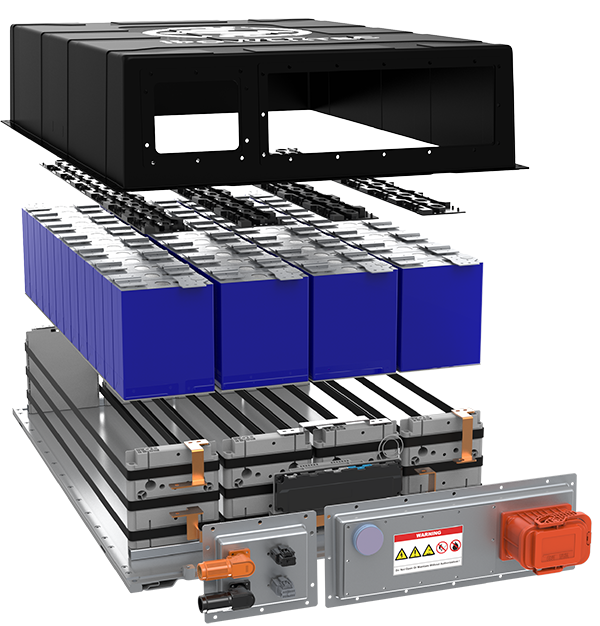
Hybrid Energy System uses lithium iron phosphate battery packs (Liquid-cooled Battery Pack, Capacity: 52.2kWh). Modular design supports flexible expansion, adapting to working environment temperature of -20°C~50°C. Cooperates with the BMS battery management system for visual lifecycle monitoring.
High Energy Density
Long Cycle Life
Easy Maintenance
Safe And Reliable
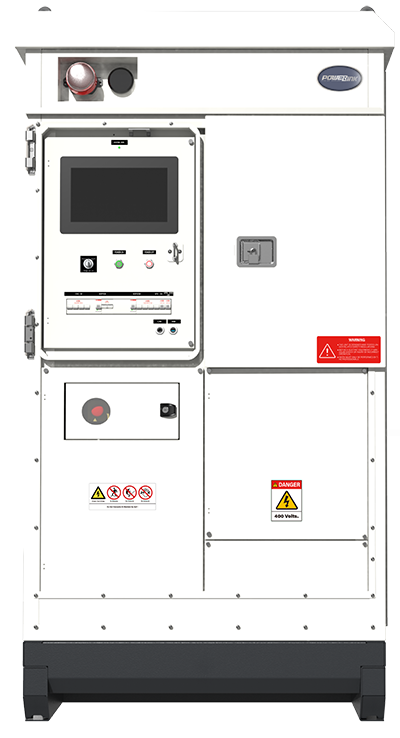
EMS System: A Localized “Smart Brain”
EMS is primarily responsible for real-time scheduling and optimization within the device and local microgrids.
- Multi-energy complementary scheduling: Calculates optimal allocation in milliseconds. Automatically shuts down diesel genset and charges batteries when sunlight is sufficient, maximizing fuel savings (up to 60% or more).
- Load forecasting and intelligent peak shaving: By using AI algorithms to predict load fluctuations, it schedules battery capacity expansion or peak shaving to prevent instantaneous overload of the genset.
- Black start control: In the event of off-grid or grid failure, EMS coordinates the energy storage system to guide the smooth start-up of the unit for critical facilities (such as data centers, base stations).
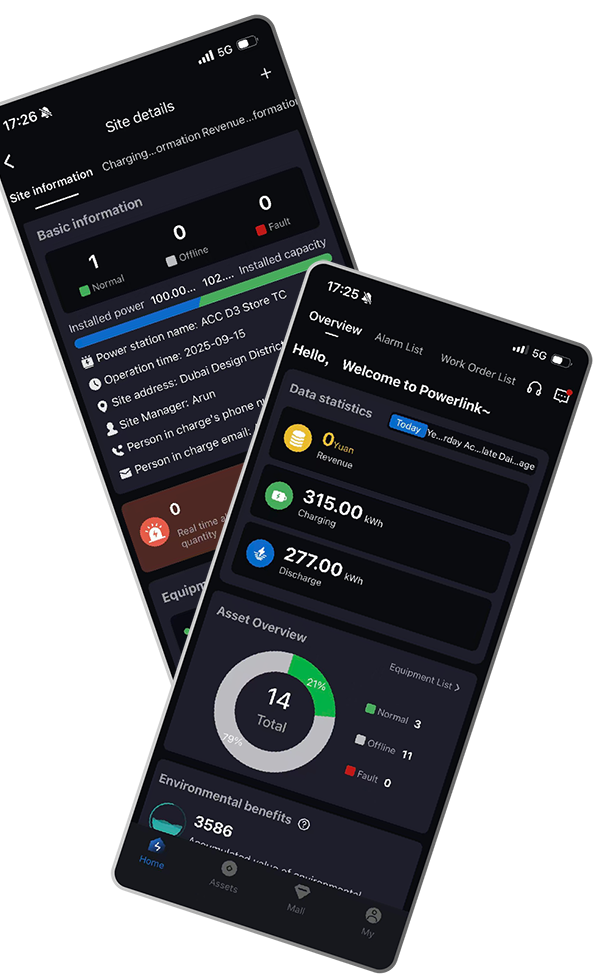
EnerWEB PLATFORM & IoT Integration
PowerLink EnerWEB is a global digital operations and maintenance platform based on IoT:
- Globally distributed monitoring: View equipment operating status in real time via web or app.
- Predictive Maintenance: Analyzes big data to issue early warnings (e.g., filter blockage, abnormal battery internal resistance), reducing unplanned downtime by >40%.
- Automatic Report Generation: One-click generation of carbon footprint and ESG reports.
Telecom Integration Terminology:
AAU (Active Antenna Unit): The RF front-end of 5G telecom, integrating antennas and RF units for signal transceiving and high-frequency amplification.
BBU (Base Band Unit): The baseband core of 5G telecom, handling digital signal processing and data exchange with AAU.
IoT Integration Scenarios: The system flexibly adapts to enable bi-directional data integration between energy systems and telecom networks.
1. Integration into operator platform
2. Integration into EnerWEB
Core Advantages & Carbon Reduction
From equipment installation to decommissioning, all operational trajectories are digitally recorded, improving the accuracy of residual value assessment of assets.
Remote fault diagnosis can reduce the need for on-site manual inspections by more than 50%.
Complies with the security and information protection certification standards for smart energy management systems.
Application scenario hints: This configuration will be the standard configuration for high-end leasing, telecom sites, microgrids in remote areas, and smart factories in 2026.
How do hybrid power solutions reduce carbon emissions?
- Energy Structure Optimization: Deploy 23% efficient mono-Si PV panels. In an Australian project, PV covered 50% of demand and cut 20t diesel per year. Pair 0.5C LFP battery packs (8000 cycle life) with PV to bring the genset runtime to zero.
- Improving Energy Efficiency: Upgrading traditional DC 48V power input to a DC 300V high-voltage input reduces line losses by 70%. It adapts to high power consumption requirements of 5G base stations (3 times higher than 4G), saving over 13,000 kWh per site annually, indirectly reducing carbon emissions.
- Clean Energy Alternatives: Intelligent algorithms reduce genset runtime by more than 80%. Using an 1800RPM engine, with the same displacement, it increases power output by 20%, lowering configuration costs, and reducing maintenance costs by over 15%. The optional Powerlink LPG genset trims CO2 by more than 60% compared to diesel gensets.