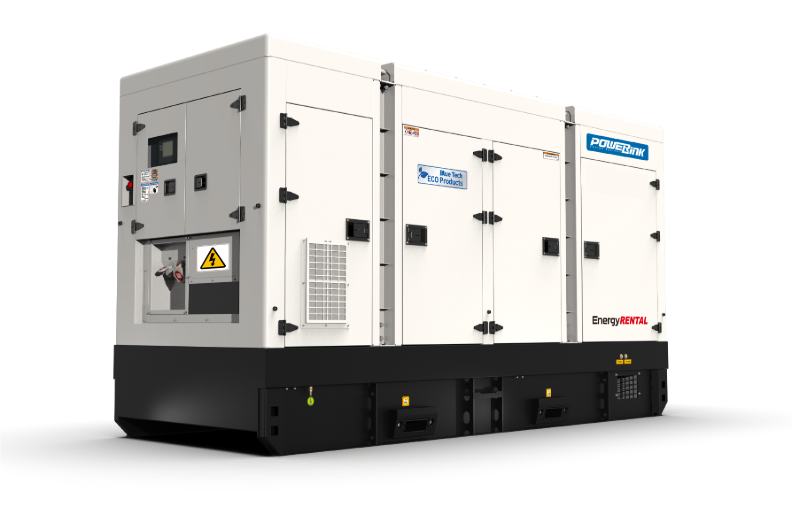
2500kVA

IHE 2500

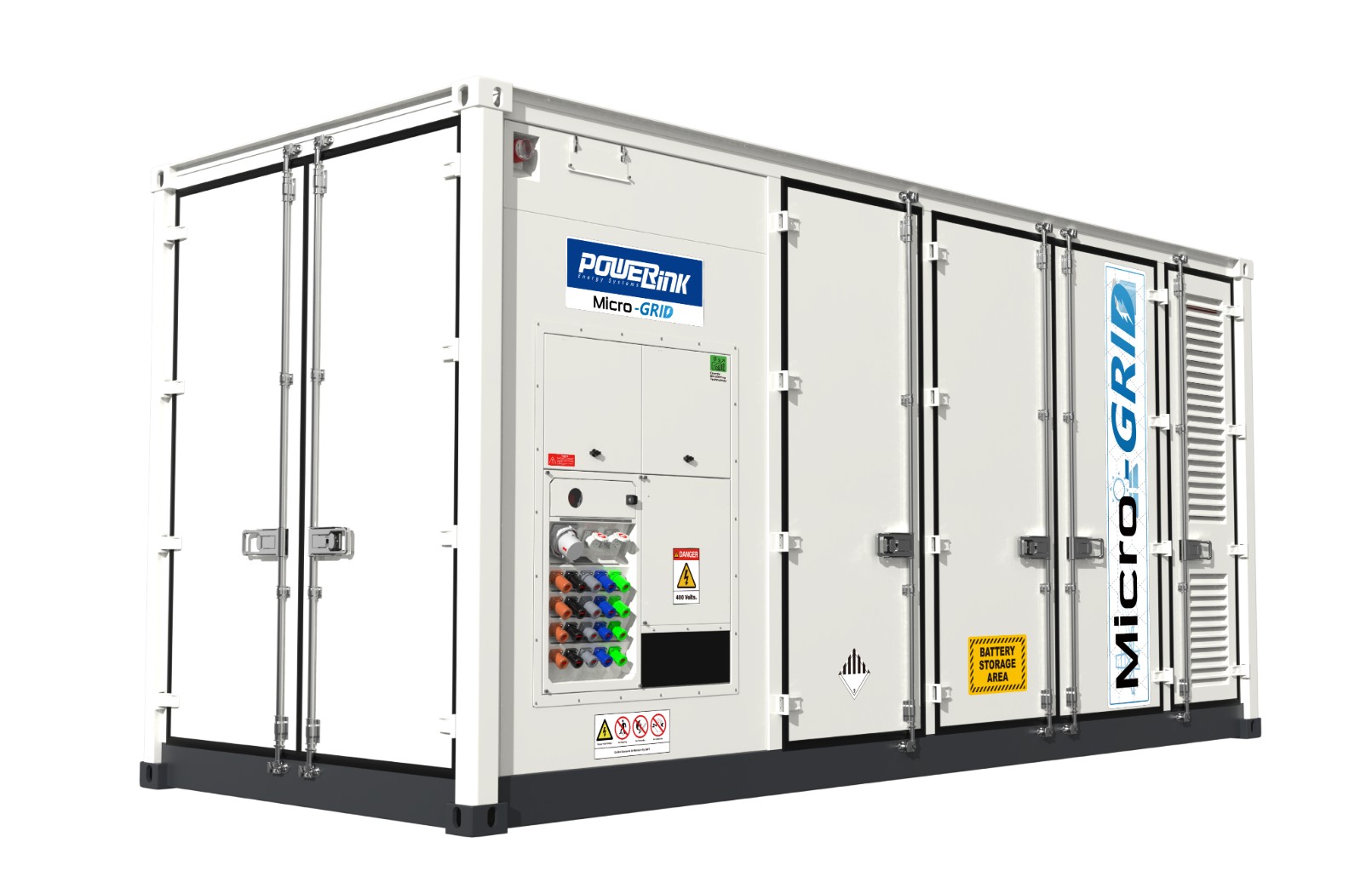
The PowerLink IHE2500 is a high‑performance micro‑grid energy storage system built to solve : unstable grid power, high peak electricity costs, and inefficient renewable energy integration. Designed for wind farms, PV stations, large factories, and grid‑side applications, it delivers reliable off‑grid and on‑grid power while cutting energy expenses and ensuring continuous operation. With a continuous output of 2500kW and 5016kWh LiFePO4 battery capacity, it supports robust peak shaving, frequency regulation, and backup power. The system features intelligent EMS, remote cloud monitoring via Web and App, and full electrical and fire protection for safe, unattended operation.

Its liquid‑cooling system maintains stable temperature in ‑20℃ to 55℃ environments, and IP54 protection ensures durability in harsh industrial sites. IHE2500 combines high power density, easy deployment, and strong compatibility to maximize self‑consumption of renewables, reduce grid dependency, and lower operational risks for energy‑intensive users.
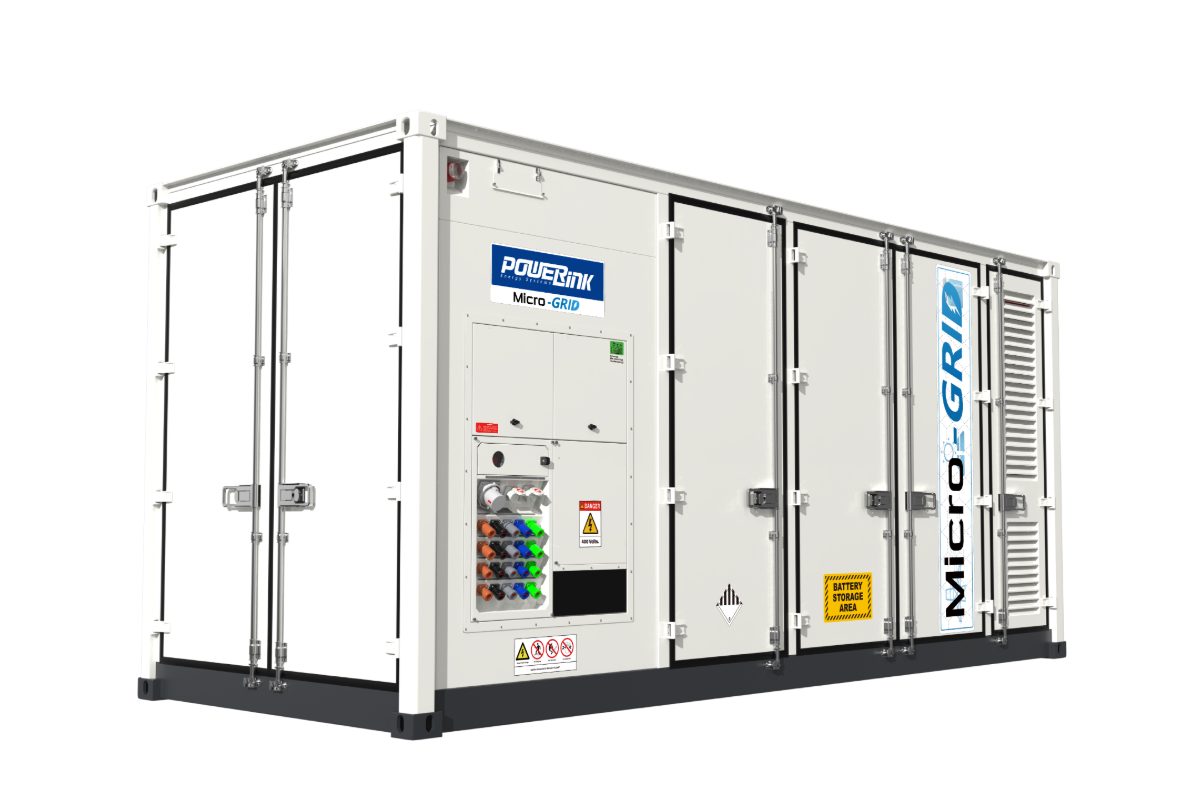
IHE2500 Products
Commited to Service

Quick Star
Fast startup with strong load surge
capability

Commited to Service

Portable
Easy to transport and install.

Commited to Service

User-Friendly
Plug-and-play operation.

Commited to Service

Reliable
Performs well in harsh conditions.

Features

High Power & Large Capacity

2500kW continuous output and 5016kWh LiFePO4 battery for heavy industrial loads.

Intelligent & Remote Management

EMS with scheduling, cloud APP/Web monitoring for real‑time control.

Rugged & Safe Design

IP54 protection, liquid cooling, full electrical and argon‑based fire protection for reliable 24/7 operation.

Ask an Expert

PowerLink provides tailored, high-efficiency energy solutions for sustainable power around the world.

IHE Series Specification

IHE2500
IHE2500

IHE2500

Continuous output power 2500 kVA / 2500 kW
Phase 3
Voltage 10500V
Battery Capacity 5016 kWh
Grid Input Power 2500 kVA / 2500 kW

IHE2500 Specification

IHE2500 Parts Manual

IHE2500 Warranty Manual

IHE2500 Brochure Manual

Applications

  • PV farm
  • Virtual power station
  • Virtual power plant
PV farm

PV farm

Designed for PV farm applications, the IHE series brings stable and efficient operation to solar installations. It mitigates voltage and frequency fluctuations caused by unstable solar radiation, optimizes charging and discharging in real time, and maximizes the utilization of photovoltaic energy. Its high integration and remote monitoring enable hassle-free operation, boosting economic benefits and grid compatibility for large-scale PV plants.

PV farm Application
Virtual power station

Virtual power station

As a key building block for virtual power stations, the IHE series enables flexible energy regulation and grid support. It integrates distributed energy storage units to deliver real-time power balancing, peak shaving, and emergency power support. With intelligent management and high compatibility, it strengthens grid resilience, optimizes resource allocation, and helps virtual power stations participate efficiently in power market transactions.

Virtual power station Application
Virtual power plant

Virtual power plant

For virtual power plant (VPP) applications, the IHE series provides stable energy buffering and precise power regulation. It aggregates distributed energy resources to form a controllable power cluster, supporting peak shaving, demand response, and grid voltage support. With high safety and flexible configuration, it enhances the VPP’s market competitiveness and ensures stable interaction with the main grid.

Virtual power plant Application

FAQs

How to choose your new power generation equipment?

Many customers need to consider the technical and economic feasibility of diesel power generation solutions. Usually the diesel genset is combined with the external large power grid, and the energy supply complements each other, which can improve the reliability and flexibility of the entire system.

To find a cost-effective, technically reliable and more environmentally friendly power generation solution, we recommend that you consider the following important factors when choosing a power generation equipment:

  • The most important thing is the installation cost. Diesel genset solutions offer very competitive installation costs compared to other power generation systems, with a limited footprint for a single kilowatt project.
  • Power generation efficiency. The power generation efficiency of diesel gensets directly affects the economy of the project. PowerLink diesel gensets are efficient and offer a high value.
  • Manufacturing and commissioning time. PowerLink diesel gensets usually take 3 to 6 months from production time plus construction and commissioning time. Your cash on delivery time will be shorter if you have it in stock.
  • Modular installation solution. Considering that the equipment is ultimately delivered safely to the installation site, the modular structure makes project installation easier and commissioning simpler and faster.
  • Another very important factor in determining the choice of power generation equipment: the operating expenses associated with the equipment. These aspects need to be considered: service intervals, spare parts costs, downtime during maintenance, and the entire working cycle of the equipment before the overhaul. Based on our long experience, we offer multi-year service contracts for PowerLink gensets. This can help reduce the need for spare parts and can predict service times in advance, reducing operating costs throughout the engine’s working life.
  • Help you select the most suitable equipment through the load analysis of the project. PowerLink’s wide range of diesel engines (5 to 3250KVA) will help you find the right solution for you.
  • The surrounding environmental conditions will have an impact on the use of the equipment, thus affecting its actual power output capacity. In other words, in some cases, your power output may be much lower than the rated power. If you plan to operate equipment at high temperatures and/or altitudes significantly above sea level, be aware of this factor.

How is the genset noise reduced?

The following three methods are usually used for noise reduction:

  • Exhaust noise reduction: exhaust noise is the main source of generator noise, and a special muffler is usually selected for noise reduction.
  • Reducing axial fan noise.
  • Sound insulation and noise reduction treatment of the machine room and genset vibration isolation.

What is the backpower? What are the two serious consequences?

The case of self-provided generator sending power to the municipal network is called reverse power supply. There are two kinds of serious consequences:

  1. The municipal power grid is not cut off, and the city network power supply and the self-provided generator power supply produce non-synchronous operation, which will destroy the unit. If the capacity of the self-provided generator is large, it will also cause the municipal power grid to shake.
  2. The city network has been outage is being tested, and its self-provided generator provides power backwards. It will electrocute some of the inspection staff.

What are the reasons why the water temperature is high and the alarm stops and cannot be used?

  • Water tank leakage or insufficient water;
  • The water temperature sensor is damaged.
  • The water tank waterway dirt is too thick, or the heat sink oil is too much.
  • Fan belt wear is too large, and there is insufficient pressure.
  • Pump wear, pump water is insufficient.
  • The thermostat opening Angle is not enough; there is a stuck phenomenon.
  • The cylinder gasket is damaged, and the water channel is connected to the cylinder.
  • The cylinder liner wears too much, and there is local water seepage.
  • The ventilation of the equipment room does not meet the requirements.
  • Engine overload operation;
  • Excessive fuel supply (including engine weakness).

How is the genset used in coordination with the main power supply?

Stable commercial power is supplied to the power load through cables. When the main power supply is interrupted due to a power outage, a signal is sent from the transfer switch to the genset, and then the genset starts and sends the generated power to the load. When the main power supply is restored, the switch will cut off the power supply of the genset and restore it to the main power supply.

All products provided by our company are energy products
Welcome to contact us