


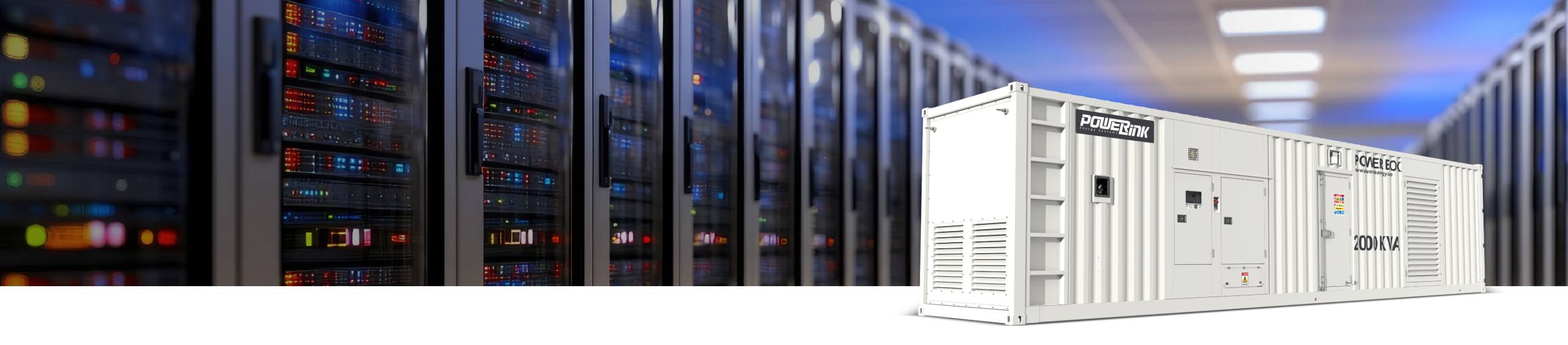
PowerLink 2000kW COP Modular PowerPod Solution for Data Center
Aug 11,2026
Project Background & Industry Pain Points
Market Trend
The rapid expansion of generative AI and large model training is driving the exponential growth of computing power density. Modern AIDC sites are increasingly arranged near urban parks and residential zones, driving higher requirements for power supply continuity, space efficiency, environmental friendliness, and rapid delivery capacity. Conventional horizontal-layout diesel generator sets can no longer match the operational demands of new-generation intelligent computing centers.
Project Basic Parameters
| Unit Model | 2000KW PowerPod Container Genset |
| Single Unit Rated Power | 2000kW COP continuous power (2500kVA) |
| Deployed Quantity | 30 sets |
| Total Installed Capacity | 60MW |
| Total Floor Space | ~500 ㎡ |
| System Power Density | 115.38kW/㎡ |
| Layout Mode | Double-layer staggered stacking modular arrangement |
| Full-load Continuous Runtime | 24h |
| Country | Australia |
Customized Integrated PowerPod Solution Design
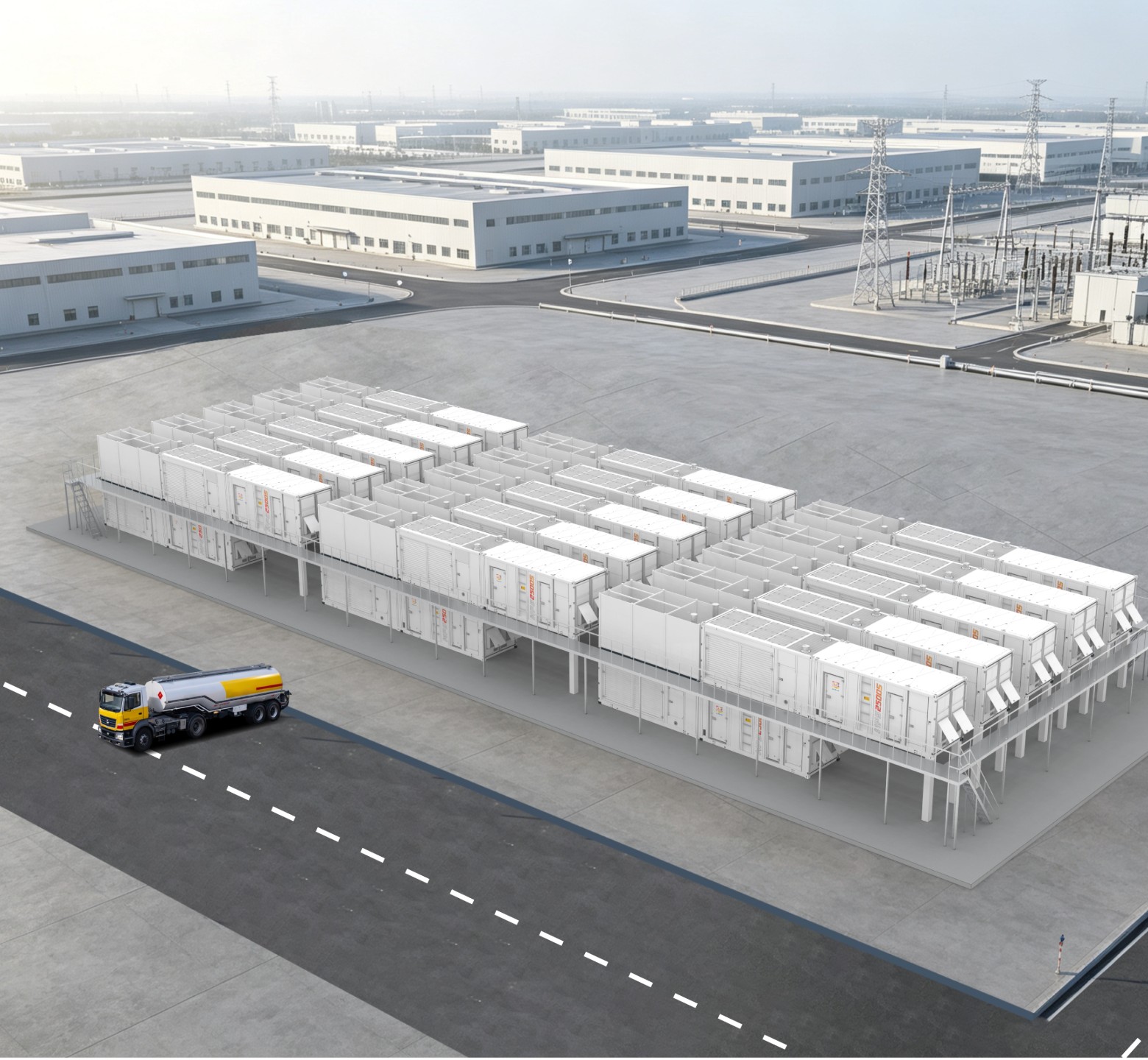
The solution adopts a standard 40ft high-cube container structure with a 1m high integrated base, achieving layered integration of the power generation core, heat dissipation, fuel storage, noise reduction, fire protection, and electrical distribution.
Staggered Stacking Space Optimization
- Upper layer: 40ft high-cube container integrates the Perkins engine, Leroy-Somer alternator, and multi-stage silencing air duct.
- Lower integrated base: Contains a 10,000L+ large storage tank and 2,000L+ daily service tank.
- Independent overhead walkway: Convenient for daily inspections without extra construction space.
- Separated remote radiator: Eliminates fan parasitic power loss and optimizes internal air flow.
High-Reliability Continuous Power Core
- Power assembly: Perkins engine exceeds ISO8528 Tier 3/Tier 4 standards (8s startup, 15s full load). Leroy-Somer alternator adapts to UPS nonlinear loads.
- Dual redundant startup: 1+1 independent starter circuits, achieving >99.99% success rate.
- Extreme environment adaptability: Full-link heat tracing for -40°C, built-in altitude compensation for 3000m+, and independent radiator maintaining stable engine temperature.
Ultra-Low Noise Acoustic Engineering
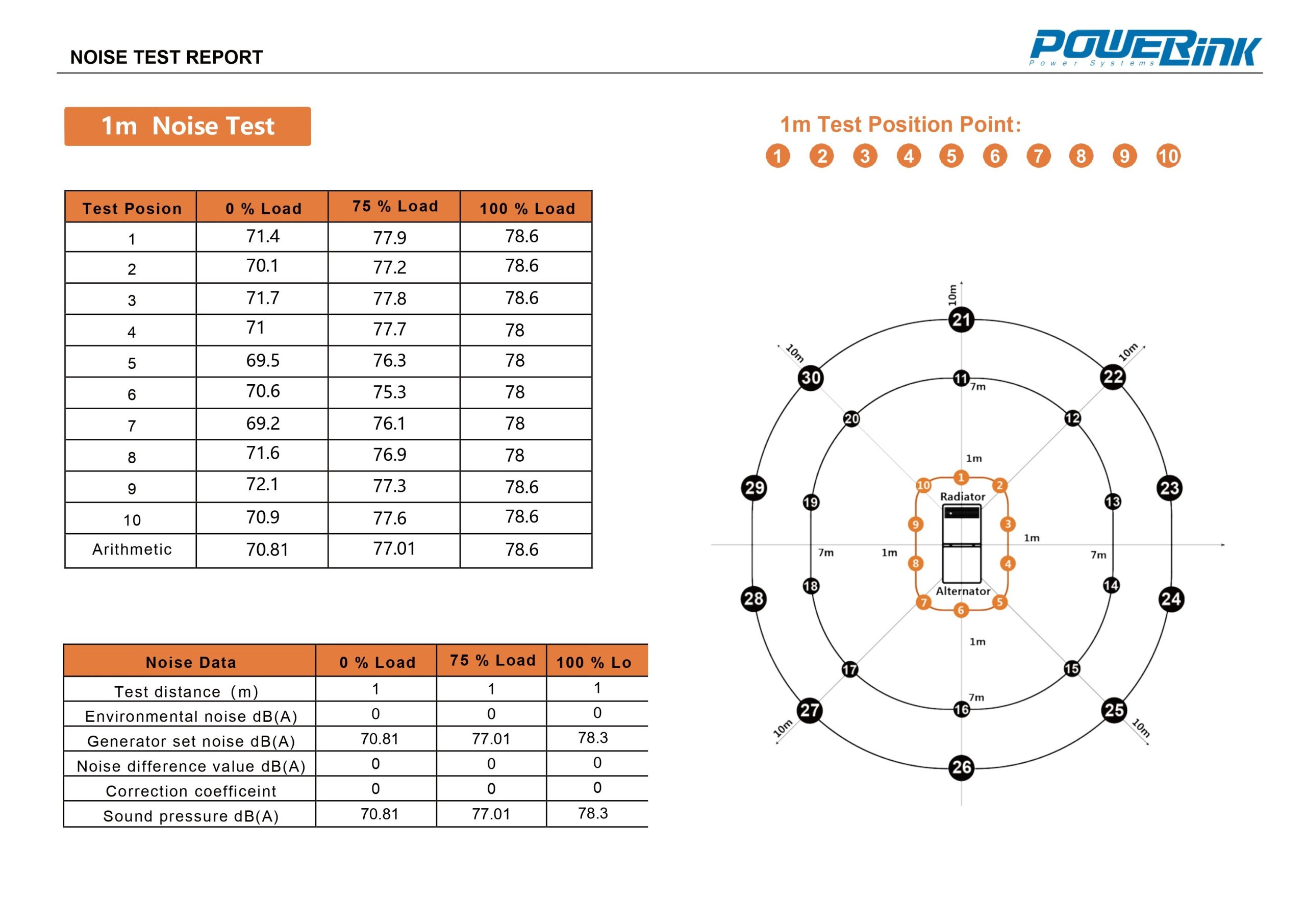
- Measured full-load noise: 79dBA@1m, far lower than the 85–95dBA of traditional units.
- Multi-stage folded silencing: Blocks mechanical noise transmission paths.
- Full-wrapped composite: Sound-absorbing shielding layer inside the cabinet.
- No extra buildings required: Directly meets urban community noise emission standards.
Closed-Loop Fuel Management System
- Double-tank storage: 10,000+L base tank plus 2,000L+ daily tank for 24h continuous operation.
- 24/7 online diesel polishing: Timed circulating filtration removes water, sludge, and bacteria.
- Full safety protection: Veeder-Root leakage detection, overflow isolation platform, and automatic refueling liquid level control.
AI Intelligent GACS Remote Monitoring
- Real-time data visualization: Centralized display of status, alarms, and load curves via map dashboard.
- AI health diagnosis: Pre-warning potential mechanical/electrical faults in advance.
- Open communication: Seamless docking with AIDC BMS/EMS systems.
- Digital twin model: Built at the factory for remote real-time inspections and data traceability.
Modular Prefabrication & Delivery Advantages
Breaking the long-cycle construction mode of traditional power station projects, the solution relies on an exclusive container prefabrication factory to achieve fast delivery and rapid launch of computing power:
95% Factory Pre-assembly
All components are installed and debugged in the workshop. Each unit passes a 12h full-load test before delivery, eliminating on-site assembly errors.
Strong Production Capacity
Monthly output of up to 50 sets, with the delivery cycle shortened to 8–12 weeks (compared with 16–24 weeks for traditional schemes).
Standard Overall Delivery
Compatible with global intermodal transportation. Requires only basic foundation fixing and cable connections upon arrival, cutting workload by 70%.
Pre-integrated Fuel Storage
Simplifies fire protection and environmental approval procedures for independent fuel depots, accelerating project compliance progress.
Project Operational Benefits & Core Value
💰 Direct Economic & Engineering Benefits
- Land cost saving: Staggered stacking layout reduces footprint by up to 60%.
- Construction cycle acceleration: High prefabrication realizes computing power revenue in advance.
- Low O&M cost: Automatic fuel polishing and intelligent monitoring reduce daily patrol manpower.
- Ultra-high reliability: COP rating and dual redundant startup ensure compliance with Tier III/IV data center 99.99%+ power availability standards.
🌍 Scenario & Sustainable Value
- Wide adaptability: Applicable to urban science parks, desert computing nodes, alpine zones, and rooftop compact areas.
- Green low-carbon: Compatible with HVO biodiesel and low-emission versions meeting EPA Tier 2 standards, matching Green AIDC goals.
- Expandable capacity: Modular parallel architecture supports phased capacity expansion without reconfiguring layouts.
Global Full-Lifecycle Service Guarantee
To match the long-term stable operation requirements of AIDC, Powerlink provides closed-loop global service covering the entire equipment lifecycle:
--- END ---
Already the last article